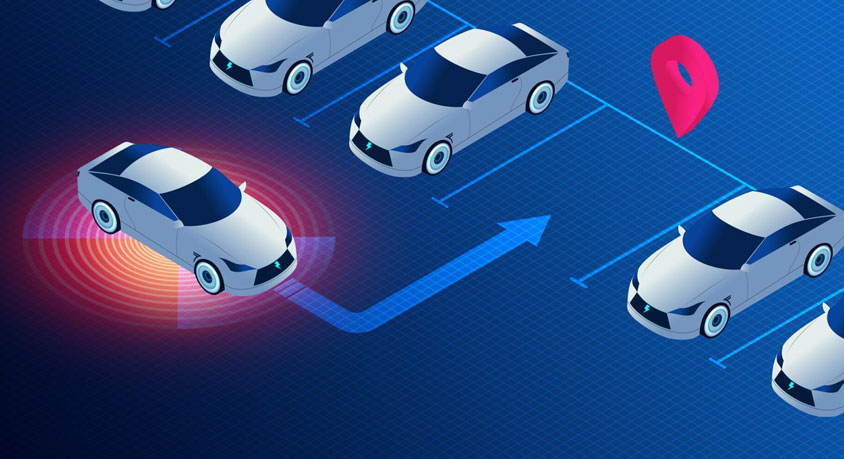
In today's accelerating urbanization, parking difficulties have become a common challenge for many cities. The contradiction between the proliferation of vehicles and limited parking resources is becoming more and more prominent, which not only affects the travel experience of citizens, but also aggravates traffic congestion and environmental pollution. Fortunately, the rapid development of IoT technology provides an innovative solution to this dilemma.
The core of a smart parking system lies in the parking sensors. These small but efficient devices are installed in each parking space and can detect whether the space is occupied in real time. Through wireless communication technology, the sensors instantly transmit the collected data to the cloud server, forming a dynamic parking lot map. Vehicle owners can easily check the location and number of vacant parking spaces nearby through a cell phone APP or car navigation system, which greatly reduces the time and fuel consumption of searching for parking spaces.
IoT-based smart parking systems are not only limited to the simple display of parking space information, but more importantly, realize smart decision-making through real-time data updates. The cloud server analyzes the collected parking space data in real time and predicts the parking lot usage trends and hotspot areas. This information not only provides owners with convenient parking guidelines, but also provides parking lot managers with a basis for optimizing resource allocation. For example, by adjusting parking rates during peak periods to guide owners to park in non-hot areas, or by launching preferential activities to attract customers during idle hours, thus effectively balancing parking demand and supply and improving the efficiency of parking lot usage.
To further enhance the effectiveness of the smart parking system, a parking management platform has emerged. The platform integrates the functions of parking query, reservation, navigation and payment, providing one-stop parking service for car owners. Owners only need to register an account on the platform and bind the vehicle information to enjoy a convenient parking experience. At the same time, the platform also analyzes user behavior through big data to provide owners with personalized parking recommendations and services. In addition, the parking management platform also realizes seamless docking with other transportation systems in the city, such as public transportation and shared bicycles, providing citizens with diversified travel options and promoting green travel.
IoT, which is based on the intelligent parking system, not only solves the problem of parking difficulties, but also has a far-reaching impact on the sustainable development of the city. First, by improving the efficiency of parking lot usage, it reduces ineffective driving and vehicle emissions resulting from searching for parking spaces, which helps improve urban air quality. Secondly, smart parking systems promote intelligent management of urban transportation and provide strong support for the alleviation of urban traffic congestion. As an important part of smart cities, smart parking systems lay a solid foundation for urban digital transformation and sustainable development.
Urban smart parking system realizes intelligent management of parking lots by using parking sensors and real-time data update technology, and improves user experience and resource allocation efficiency through the parking management platform. More importantly, the smart parking system provides strong support for sustainable urban development and promotes smart, green and efficient urban transportation.
Disclaimer: Mention of any brand or trademark is for identification only and does not imply partnership or endorsement